 See photos and updates from listings directly in your feed
 Share your favorite listings with friends and family
 Save your search and get new listings directly in your mailbox before everybody else
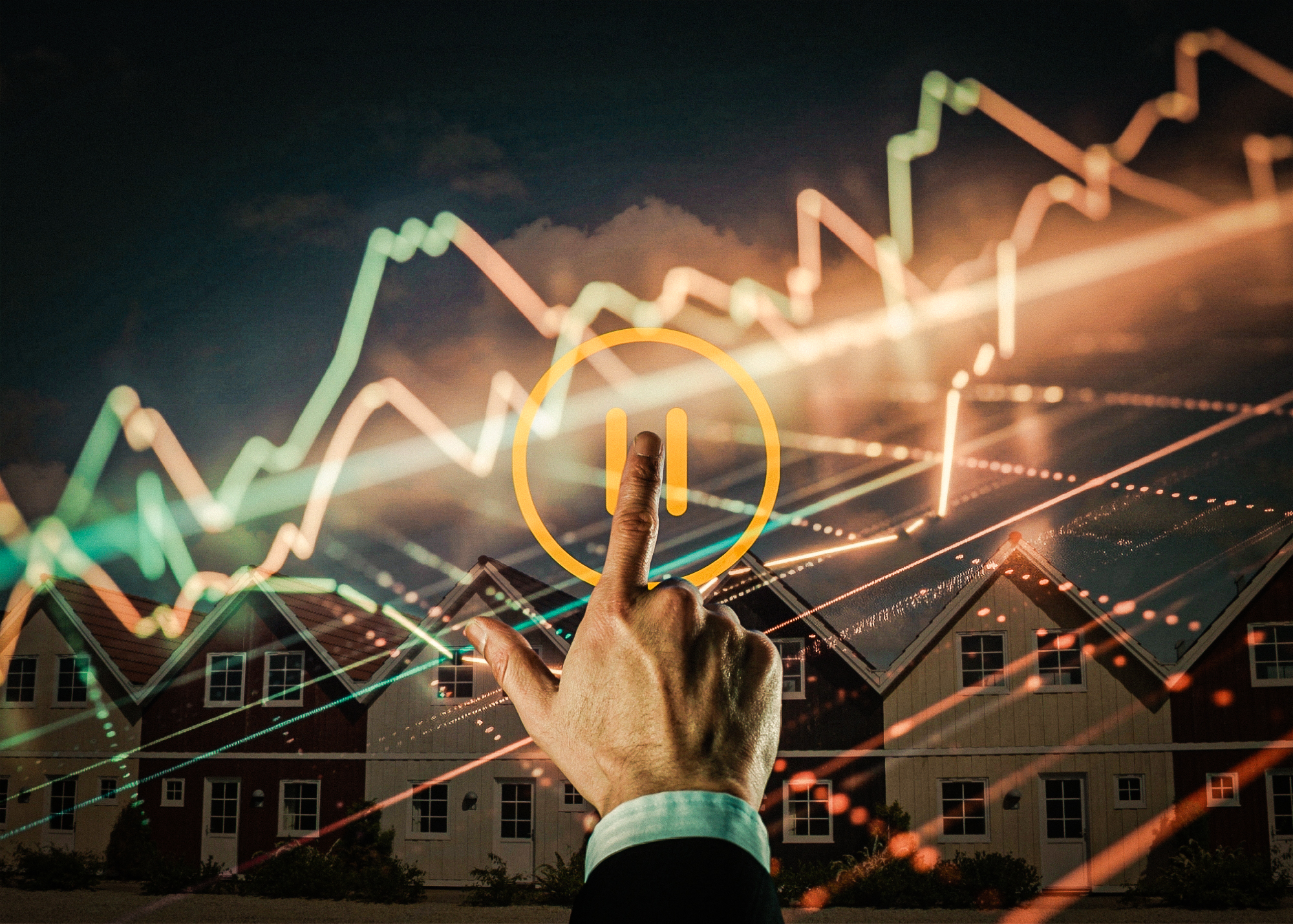
The housing market doesn’t move in isolation. It reacts to global shocks, energy prices, inflation expectations, and—most importantly—consumer confidence. Right now, the ripple effects of geopolitical tension in the Middle East, particularly the Iran conflict, are showing up clearly in the U.S. economy. Higher oil prices, volatile stock markets, and rising uncertainty are feeding directly into weaker buyer demand.
And real estate is one of the first sectors to feel it.
Consumer Confidence Is Sliding Back Toward COVID-Era Lows
Recent data from the University of Michigan’s consumer surveys shows sentiment falling sharply as households react to the Iran conflict and its inflationary impact. The index dropped to roughly the mid-50s in March 2026—levels that are still far below historical norms and comparable to periods of major economic stress.
To put it in context, pre-pandemic consumer sentiment typically ranged much higher, while today’s readings remain stuck near the lower bound of the last decade. The St. Louis Fed has also noted that consumer sentiment remains “at the lower range of its historical variation since the early 1950s,” reflecting persistent economic anxiety rather than a normal cyclical dip.
This matters because consumer confidence is not just a “feelings index.” It directly correlates with big-ticket spending decisions—especially housing.
Oil Shock → Inflation Fears → Buyer Hesitation
One of the biggest transmission channels from global conflict into housing is energy prices.
The Iran conflict has disrupted global oil flows, pushing gasoline prices sharply higher. That feeds into:
- Higher commuting costs
- More expensive construction materials
- Increased shipping and logistics costs
- Sticky inflation expectations
When households see fuel costs jump, they don’t just cut discretionary spending—they reassess long-term commitments like buying a home.
Even when inflation isn’t accelerating dramatically, the visibility of higher prices at the pump creates behavioral pullback in spending. That’s exactly what we’re seeing now.
The Housing Market Reaction: Demand Softening, Not Collapsing
Nationally, homebuilder sentiment has already dropped to multi-month lows as uncertainty rises and buyer traffic slows. Reports show declining expectations for future sales and increased use of incentives just to keep deals moving.
At the same time, mortgage rates remain elevated due to inflation fears tied to energy shocks, reinforcing affordability pressure. That combination—higher rates + cautious buyers—is a classic demand dampener.
But this is not a crash environment. It’s a pause environment.
Buyers aren’t disappearing. They are hesitating.
California Real Estate: The Two-Speed Market Effect
California always amplifies macroeconomic shifts. But the impact is uneven across regions.
Central Valley: First Signs of Buyer Pullback
Markets like Stockton, Modesto, Manteca, Tracy, and Lathrop tend to be highly sensitive to:
- Gas prices (commuter-heavy households)
- Interest rate swings
- Entry-level affordability
When fuel prices spike, the Central Valley feels it immediately. Commuters reassess long-distance drives to Bay Area job centers, and first-time buyers become more rate-sensitive.
The result is typically:
- Longer days on market
- Increased price reductions on overlisted homes
- Fewer multiple-offer situations outside entry-level price bands
- More buyer contingencies returning to negotiations
In short, liquidity thins out first here.
East Bay: Still Active, But More Selective
Markets like Pleasanton, Livermore, Dublin, and parts of the Tri-Valley behave differently.
Demand doesn’t vanish—it becomes more selective.
What’s changing:
- Buyers are more valuation-sensitive
- Luxury and move-up segments slow faster than entry-level
- Equity-rich sellers are less urgent, reducing turnover
- Relocation buyers are more cautious due to job-market uncertainty
The East Bay is not freezing—it’s recalibrating. Buyers are still active, but they are negotiating harder and walking away more often when pricing feels stretched.
Why This Is Happening Now (The Bigger Picture)
There are three overlapping forces driving the current cooling phase:
- Geopolitical risk premium
The Iran conflict is keeping oil prices elevated and unstable. - Inflation psychology
Even modest inflation becomes powerful when it hits essentials like gas and groceries. - Consumer confidence erosion
When sentiment weakens, households delay major financial commitments—even if they are financially capable.
The combination of these factors is what slows real estate, not a single data point.
Temporary Cooling, Not a Structural Breakdown
It’s important to separate short-term sentiment cycles from structural housing fundamentals.
- California still has chronic undersupply
- Population centers remain economically strong
- Equity positions for homeowners are still historically high
- Demand doesn’t disappear—it gets delayed
What changes in moments like this is timing, not necessity-based demand.
Buyers step back, inventory sits longer, and sellers adjust expectations.
Then sentiment stabilizes—and activity returns.
Bottom Line
The Iran conflict and resulting energy shock are not just global headlines—they are directly influencing household behavior in the U.S. economy.
Higher gas prices and inflation concerns are weakening consumer confidence, and that hesitation is flowing straight into real estate.
In California, the effect shows up first in commuter-heavy Central Valley markets and then filters into East Bay move-up segments.
The market isn’t breaking—it’s pausing under uncertainty.
And in real estate cycles, pauses are often where the next shift in pricing and opportunity begins.