 See photos and updates from listings directly in your feed
 Share your favorite listings with friends and family
 Save your search and get new listings directly in your mailbox before everybody else
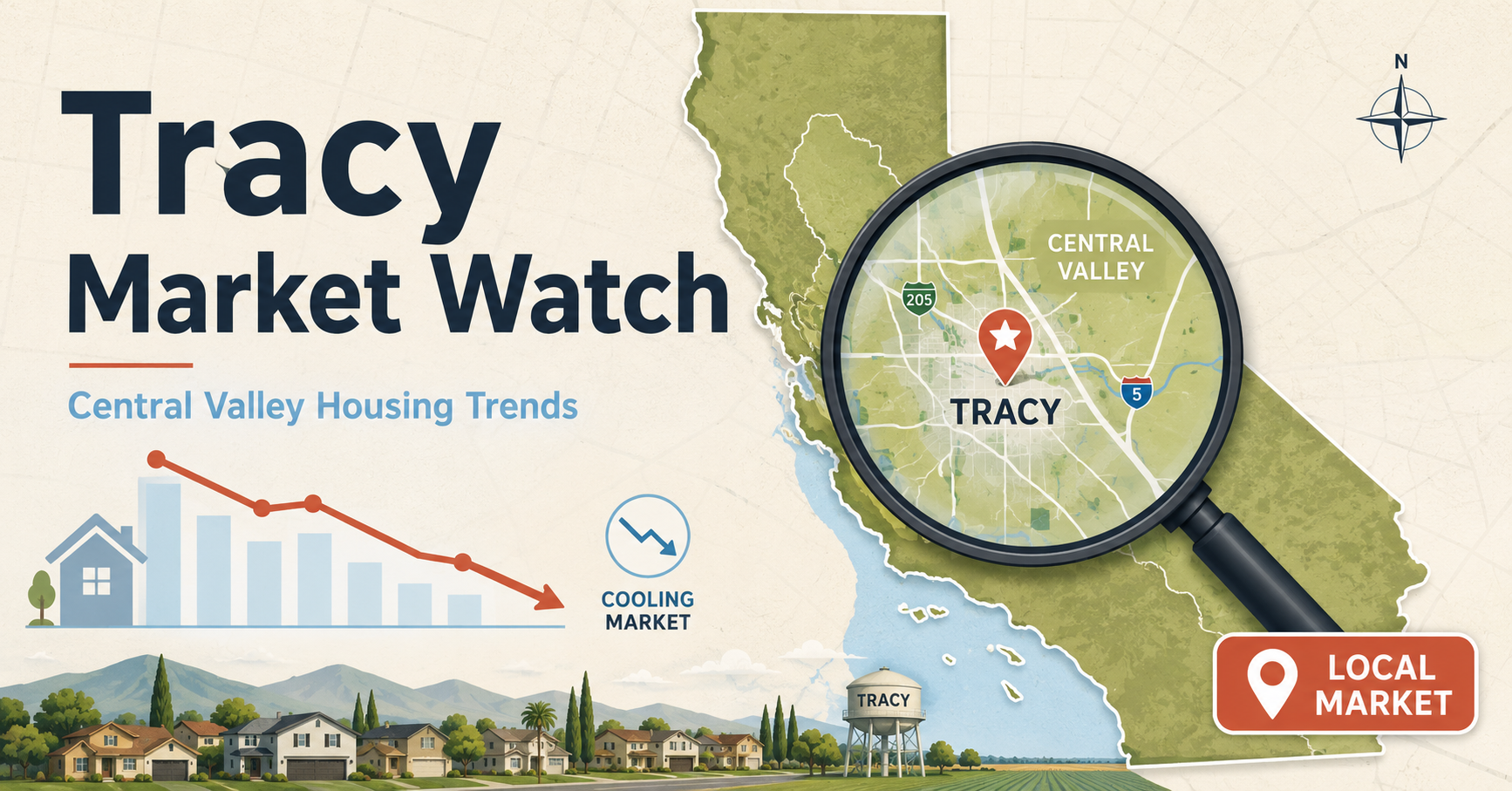
The real estate market does not usually change all at once. It often starts quietly.
Before the headlines confirm a shift, agents begin to notice it in conversations, showings, offers, price reductions, and the way buyers behave. That is what we are beginning to see in Tracy and across parts of the Central Valley.
Buyers are still active, but they are more deliberate. They are taking longer to make decisions. They are comparing more homes. They are watching interest rates closely. They are less willing to stretch on price. At the same time, many real estate professionals, builders, and related companies are reporting higher inventory and slower sales activity.
That combination matters.
For the last several years, sellers have become used to a market where low supply and strong demand created urgency. In that kind of market, buyers often felt pressure to act quickly. Today, the tone feels different. Buyers are not necessarily gone, but they are no longer rushing.
The Fed’s Message Adds Another Layer of Uncertainty
One of the more notable developments is the Federal Reserve’s recent policy signal. At its June meeting, the Fed left interest rates unchanged, but the bigger surprise was in the projections. Nine of nineteen Fed policymakers indicated that they believe interest rates may need to be raised again this year.
That is remarkable because many consumers and market participants had been waiting for the opposite: lower rates.
Whether this is a real policy warning or partly a communication strategy, the effect on buyer psychology is important. If buyers believe mortgage rates could stay elevated, or even move higher, affordability remains under pressure. If sellers believe lower rates are just around the corner, they may hold firm on price longer than the market will support.
That gap between buyer caution and seller expectations is where slowdowns begin.
Tracy Is Especially Sensitive to Affordability
Tracy sits in a unique position. It is part of the Central Valley, but it is also closely tied to Bay Area employment, commuting patterns, and household affordability. Many buyers look at Tracy because they want more home for their money compared with the inner Bay Area.
That demand has helped support prices for years. But affordability has limits.
When mortgage rates remain high, the monthly payment becomes the real issue. A home that looked affordable at one rate can feel completely different at another. Even if a buyer likes the property, they may pause, negotiate, or wait for a better opportunity.
Recent market data already points to softening. Tracy home values are down compared with last year, listing prices have eased, and homes are taking longer to move than they did during hotter market periods. That does not mean the market has collapsed. It means the market is becoming more selective.
A Selective Market Is Not the Same as a Dead Market
This is an important distinction.
A slower market does not mean homes will not sell. Well-priced homes in good condition can still attract serious buyers. Properties in desirable locations can still perform well. Homes that are clean, accessible, well-marketed, and priced correctly still have an advantage.
What is changing is the margin for error.
In a fast market, a seller could sometimes overprice and still receive activity. In a slower market, buyers notice every detail. They compare condition, price, location, upgrades, financing costs, and competing inventory. If a home is priced too aggressively, buyers may simply move on.
This is especially true when inventory rises. More available homes give buyers more choices. More choices reduce urgency. Less urgency creates more room for negotiation.
Sellers Should Watch the Market Ahead of the Headlines
The most important message for sellers is this: do not wait for national headlines to tell you what is already happening locally.
Real estate is local. The Tracy market can shift before broader California or national data fully reflects it. By the time the slowdown is obvious in reports, sellers may already be chasing the market down with price reductions.
That does not mean sellers need to panic. It means they need to be realistic.
A smart pricing strategy today is not about giving the property away. It is about positioning the home correctly from the beginning so it gets attention while buyers are still engaged. The first few weeks on the market remain critical. If a home launches too high and sits, buyers may begin to assume something is wrong, even if the only issue is price.
Buyers Are Moving Carefully, Not Emotionally
For buyers, this market may offer more breathing room than we have seen in recent years. There may be more opportunities to compare homes, negotiate repairs, ask for credits, or avoid rushed decisions.
However, buyers should also understand that waiting does not guarantee a better deal. If rates rise further, a lower purchase price may not always translate into a lower monthly payment. The best opportunity is often not just about price, but about the total cost of ownership.
That includes the mortgage payment, taxes, insurance, maintenance, commute, and long-term plans.
What This Means for Tracy and the Central Valley
The Central Valley has benefited from affordability-driven demand, especially from buyers moving outward from more expensive Bay Area communities. Tracy, Mountain House, Lathrop, Manteca, and surrounding areas have all felt the effects of that migration.
But affordability-driven markets can also be sensitive when financing costs rise.
If buyers become more cautious and inventory continues to build, sellers may need to adjust expectations. The market may no longer reward aspirational pricing. Instead, it may reward preparation, accurate pricing, strong presentation, and local expertise.
The Bottom Line
The market may be slowing before the full data confirms it.
In Tracy and across parts of the Central Valley, buyers are becoming more deliberate, inventory appears to be building, and higher interest rates continue to weigh on affordability. The Federal Reserve’s recent signal that more rate hikes are possible only adds to the uncertainty.
This is not a reason to panic. It is a reason to pay attention.
For sellers, the strategy should be realistic pricing, strong presentation, and early responsiveness to buyer feedback. For buyers, the opportunity is to be patient, prepared, and clear about monthly affordability.
Markets change slowly, then suddenly. The signs are worth watching now.